BLOG
Pelvic Floor Problems: The Signs You Shouldn’t Ignore
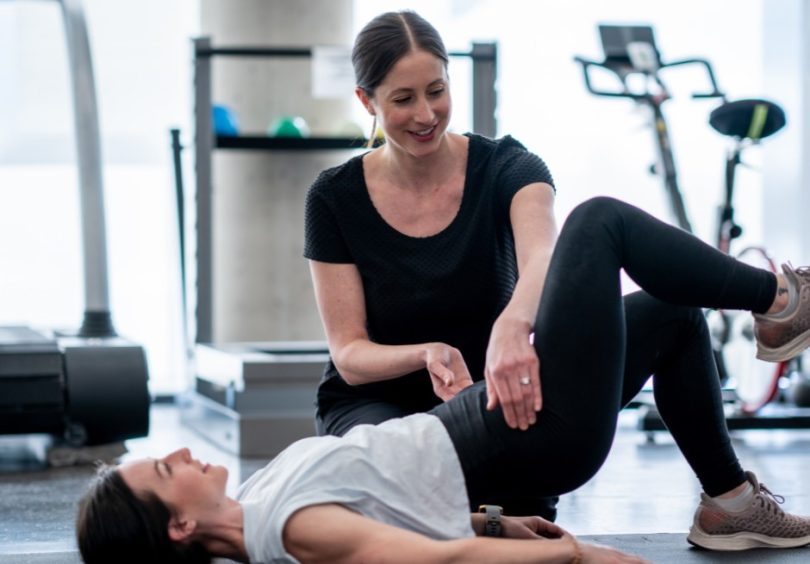

By Hayley Runting, Senior Physiotherapist, Malvern Physiotherapy Clinic
Common signs of a weak pelvic floor include bladder or bowel leakage, a feeling of heaviness or pressure, and ongoing core or lower-back pain. They can affect people at any stage of life, not only after having a baby. A pelvic floor physiotherapist can assess the muscles and create a tailored program that may help improve control and support.
Pelvic floor problems are far more common than most people realise, and far less talked about. Continence Health Australia reports that 7.2 million Australians over the age of 15 experience incontinence, which is more than one in three people, and that 70 per cent of them are under 65.
A common myth keeps people from getting help: that pelvic floor problems only happen after childbirth. That is not the case.
The pelvic floor is a group of muscles that sits like a hammock between the tailbone and the pubic bone. The Better Health Channel describes their role as supporting the bladder and bowel, and in women the uterus and vagina.
They do three jobs at once. They hold your pelvic organs in place, they help control the bladder and bowel, and they work with your breathing, deep abdominal and back muscles as part of your trunk support system. That last point is why pelvic floor issues and stubborn core or lower-back weakness so often show up together.
The signs are often small and easy to normalise. Common ones include:
Yes, and this is important. Not every pelvic floor problem is a weakness problem.
An overactive or over-tight pelvic floor can produce its own set of symptoms, including pain with urination or sexual activity, difficulty emptying, urgency and pelvic pain. In that situation, doing more squeezes can make things worse rather than better.
This is one of the clearest reasons to be assessed rather than to start a generic pelvic floor program from an app. The right approach depends entirely on what your muscles are actually doing, and a thorough assessment is important to determine the most appropriate treatment approach.
Yes. Men have a pelvic floor too, and it can become weak, overactive or poorly coordinated.
The most common reason men seek pelvic floor physiotherapy is bladder leakage after prostate surgery. Continence Health Australia notes that strong pelvic floor muscles play a key role in recovery after prostate surgery, and the RACGP includes pelvic floor muscle training in its guidance for men having this surgery.
No. Pregnancy and birth are common reasons people come in, and we support many patients through that season at our Malvern East clinic, including with pregnancy and post-natal physiotherapy and exercising safely during pregnancy.
But pelvic floor function can also be affected by:
We understand that this can feel like a daunting appointment to book, so it helps to know what to expect.
Your physiotherapist will start with a conversation. That covers your symptoms, your bladder and bowel habits, your health history, your activity and any goals you have. Much of the useful information comes from this discussion alone.
From there, assessment may include looking at how you breathe and how your trunk muscles coordinate, assessing posture and movement, and reviewing how you are currently attempting to activate the pelvic floor. Many people are surprised to learn they have been doing their exercises in a way that is not fully achieving what they intended.
Where appropriate and with your consent, real-time ultrasound can be used as a non-invasive way to see the muscles working, which is often very helpful for learning the correct pattern.
Similarly, an internal examination is another assessment option. This is always discussed first and your full consent is gained beforehand. The examination should be pain-free, and allows for a thorough assessment of both your pelvic floor muscles and your technique contracting these muscles. It also allows for determining if the muscles are overactive or not, whether your symptoms are related to any other causes such as prolapse or tissue sensitivity, or where your pain might be coming from. This assessment can be paused at any point, meaning you stay in control throughout, however many patients find the process not as scary or uncomfortable as they feared.
For many people, yes, when they are the right exercises done correctly and consistently.
Continence Health Australia notes that everyone has a pelvic floor, and that just a few minutes of exercise a day can help with bladder and bowel control. The catch is that “do your pelvic floor exercises” is generic advice, and generic advice does not work well, particularly as you can’t see if you’re using the muscles correctly.
Getting the technique right matters. So does knowing whether your issue is one of weakness, overactivity, coordination or timing, because the program is different in each case. And, as with any muscle training, consistency over a period of weeks matters more than intensity in any one session.
Following an assessment, your physiotherapist can build a program suited to your specific situation and review it as you progress. For some people, Clinical Pilates is a useful way to integrate that work with broader strength and control, in a supervised setting.
It is worth booking an assessment if:
You do not need a referral to see a physiotherapist in Australia, and you do not need to wait until symptoms are severe. Earlier is generally easier.
Some symptoms need medical review rather than physiotherapy first, including blood in the urine, pain with fever, or a sudden change in bladder or bowel control. Please see your doctor promptly if any of those apply.
Bladder or bowel leakage, urgency, a feeling of heaviness, bulging or pressure in the pelvis, and persistent core or lower-back weakness are the most common signs. Any of these is worth having assessed.
Yes. Men can experience leakage or urgency, particularly after prostate surgery. Assessment and treatment are always tailored to the individual and their goals.
Any time symptoms are present, including mild ones. Also worth considering when planning a pregnancy, after birth at any stage, and before or after prostate or pelvic surgery.
They can help many people when the technique is correct and the program suits the underlying problem. Because some pelvic floors are overactive rather than weak, generic squeezing advice does not suit everyone, which is why assessment first is worthwhile.
No. Menopause, surgery, chronic constipation or cough, heavy lifting, high-impact sport and ageing can all affect pelvic floor function in people who have never been pregnant, including men.
Not necessarily. It is one option among several, it is always discussed and consented to beforehand, and you can decline or defer it. A great deal can be assessed and treated without it.
If something in this article sounded familiar, an assessment is a straightforward, private and practical next step. These are common problems, we discuss them every day, and there is usually more that can be done than people expect.
Book online at malvernphysio.janeapp.com or call our team on 03 9078 8434. We are at 299 Wattletree Road, Malvern East VIC, close to Malvern, Armadale, Toorak, Glen Iris and across Stonnington. No referral is needed.
Hayley Runting is a Senior Physiotherapist at Malvern Physiotherapy Clinic with a special interest in women’s health. She graduated from the University of Melbourne more than a decade ago and has over 15 years of pelvic health experience across maternity ward and private practice settings. Hayley completed postgraduate qualifications in Continence and Pelvic Floor Physiotherapy in 2017, alongside further study in neck and back pain management and sports injury treatment. Her clinical interests include pre- and post-natal conditions, pelvic girdle pain, pelvic floor dysfunction and pelvic pain. She has taught Clinical Pilates for over 15 years and runs the clinic’s pre- and post-natal Clinical Pilates classes in Malvern East.
This article is general information only and is not a substitute for individual assessment or advice. Please book an appointment so we can tailor recommendations to you. All practitioners at Malvern Physiotherapy Clinic are registered with the Australian Health Practitioner Regulation Agency (AHPRA).
Published October 6, 2026

Chronic Pain and Physiotherapy: What You Need to Know Living with chronic pain can be exhausting. Unlike acute pain, which usually resolves as the body heals, chronic pain...
Learn More
Understanding Running Injuries: Why They Happen and Where They Show Up Running places repetitive mechanical load through the same tissues, often thousands of times per session. Because...
Learn More
Finding the Best Physiotherapy Near You: A Local Guide If you’ve ever searched “physiotherapy near me” online, you’re not alone. In Australia, thousands of people search this term...
Learn More
How Pre and Post-Operative Physiotherapy Prepares Your Body for Surgery Introduction Undergoing surgery is a significant event, and ensuring your body is well-prepared can make a remarkable difference...
Learn More
Written by Mark Fotheringham, Principal Physiotherapist, Malvern Physiotherapy Clinic There is no single right choice for everyone. Physiotherapy suits people wanting assessment, diagnosis and an evidence-based plan. Chiropractic...
Learn More
The Benefits of Physiotherapy for Seniors: Stay Strong, Mobile and Independent As we age, our bodies change – but that doesn’t mean strength, mobility or independence are out...
Learn More
Can Stretching Reduce Muscle Injury Risk? What the Evidence Really Says Flexibility exercises are often recommended to improve movement, reduce tightness, and support recovery. However, many people...
Learn More
How Physiotherapy Can Support You Through Pregnancy and Postnatal Recovery Pregnancy is an incredible journey, but it also brings significant changes to your body. As your baby grows,...
Learn More
Sports injury prevention physiotherapy focuses on building strength, managing training load, prioritising recovery, and addressing early warning signs before minor issues become significant injuries. Research supports progressive strength...
Learn More
When to Seek Specialist Physiotherapy for Persistent Pain If you’ve been living with pain for months – or even years – and still don’t have a clear...
Learn More
Why Bone Health Deserves Your Attention Bone density plays a critical role in long-term health and function — particularly for women. From adolescence through menopause and beyond, a...
Learn More
Relieve TMJ pain with expert physiotherapy at Malvern Physiotherapy If you’ve ever experienced pain, clicking, or difficulty moving your jaw, known as the temporomandibular joint or TMJ, you...
Learn More
By Mark Fotheringham, Principal Physiotherapist, and Peter Growse, Senior Musculoskeletal Physiotherapist, Malvern Physiotherapy Clinic Winter court and team sports, such as netball, basketball and soccer, most often cause...
Learn More
With a recent spate of kneecap (patella) tracking issues, I thought I would explore this injury more and describe the reasons behind faulty patella tracking. Patella-tracking issues are...
Learn More
The start of the new school year has arrived and as a parent you want to ensure your child has the best possible experience. One important aspect is...
Learn More
Have you or someone you know been diagnosed with arthritis? Have you had a scan showing “bone on bone” or been told you’ll inevitably need a joint replacement?...
Learn More
Everybody will have experienced a time when they have an important event coming up, and the last thing they could possibly want is an injury. So, how can...
Learn More
How Can Real-Time Ultrasound Improve Muscle Activation and Recovery? At Malvern Physiotherapy Clinic, we use Real-Time Ultrasound (RTUS) as an assessment and rehabilitation tool to help patients...
Learn More
One of the most influential recent developments in sports medicine’s understanding of human physiology has been grasping the effect that load has on tissue. When I speak of...
Learn More
Running technique has become a hot topic recently with a growing trend towards ‘barefoot’ running and forefoot strike. The popular book “Born to Run” by Christopher McDougall along...
Learn More
Training programs set for professional athletes have changed over time as physiotherapists and the sports medicine profession improve their knowledge about how the body responds to exercise. Not...
Learn More
As we begin to settle into the new school year, parents have an important role to play in ensuring their children have a healthy, active, and pain-free time...
Learn More
Research has shown just 45 minutes of Pilates, twice a week for 8 weeks, was able to increase both flexibility, strength and your lower back control. This study...
Learn More
What is hypermobility? Hypermobility refers to excessive joint laxity and range of motion. There are numerous causes of joint hypermobility, including genetic factors or development after trauma/ injury....
Learn More
Posture is a frequent topic of discussion for physiotherapists at Malvern Physiotherapy Clinic, clients, the media and society. A common belief is that spinal pain is caused by...
Learn More
Pelvic Floor Muscles – Where are they? What do they do? You may have heard the pelvic floor muscles mentioned in the same sentence as having a baby...
Learn More
Comparing Musculoskeletal and Sports Physiotherapy: Which One Do You Need? When seeking physiotherapy, it can be helpful to understand the different areas of expertise within the profession. While...
Learn More
Understanding Inflammation: What It Is and How Physiotherapy Can Help Inflammation is a natural response in the body, playing a crucial role in healing and recovery. However, when...
Learn More