BLOG
How Can Tradies and Manual Workers Prevent and Manage Back and Shoulder Pain?
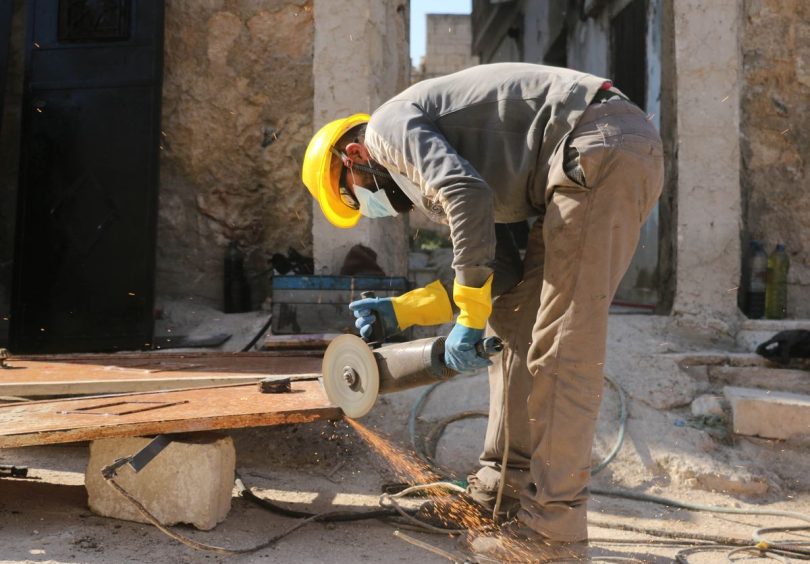

Tradies and manual workers can prevent and manage back and shoulder pain by warming up before heavy work, lifting with the legs and keeping loads close to their bodies, varying tasks through the day, and building strength outside work. If a niggle lingers, physiotherapy in Malvern East helps assess the cause and guide recovery.
August is Tradies National Health Month, so it is a fitting time to talk about the part of the body that quietly does most of the work: your back and shoulders. If you are on the tools, they clock up thousands of loaded movements a week, often in awkward positions and under time pressure.
The good news is that most of the aches that come with manual work respond well to a few practical habits, and to getting a niggle looked at early rather than pushing through it. Here is a down to earth guide from our team at Malvern East.
Manual work is repetitive loading. Lifting, carrying, drilling overhead, digging, plastering, or laying bricks: each task asks your spine and shoulders to produce force again and again, often at the edge of your range.
Your back manages load every time you bend, twist or carry. Your shoulders take a hammering with any overhead or reaching work, because the arms are working away from the body where it has the least mechanical advantage.
Add long days, cold mornings and the odd heavy one-off lift, and the tissues have plenty to adapt to. That is normal. Problems tend to start when the load consistently outpaces what your body has had a chance to prepare for.
A niggle is your body flagging that something is working harder than it would like. Ignored, that small signal can build.
We often see a two-week problem turn into a two-month one because someone kept loading a sore back or shoulder without changing anything. The original tissue does not get a chance to settle, you start guarding and moving differently, and other areas pick up the slack and get grumpy too.
Pushing through is not toughness, it is usually just delay. Catching a niggle early, adjusting how you work for a short while, and getting it assessed if it hangs around, tends to keep the whole thing smaller and shorter.
You do not need to wrap yourself in cotton wool. A handful of practical habits carries most of the load.
Warm up before heavy work. A few minutes of easy movement before the first big lift helps prepare muscles and joints, much like an athlete before a game. Simple strategies such as lifting lighter loads before progressing to heavier ones as the morning goes on, or taking a quick walk and doing a few arm swings on a cold morning, can help.
Hinge and lift with the legs, load kept close. Bend at the hips and knees, keep your chest up, and hold whatever you are lifting close to your body. The further a load sits from you, the more your lower back has to manage.
Vary tasks and switch sides. Doing the same movement for hours concentrates load in one spot. Where you can, rotate jobs through the day and swap which arm or side leads, so no single area cops everything.
Build strength and mobility outside work. A body that is stronger and moves more freely handles daily loading with more in reserve. Regular strength work, and something like Clinical Pilates for control and mobility, can support this well. Individual guidance helps you target the right areas.
Respect recovery. Sleep, a bit of movement on days off, and not stacking every heavy job into one brutal week all give tissues time to adapt. Recovery is when the body gets stronger, not just when it rests.
Do not ignore pain that hangs around. Short-lived soreness after a big day is common. Pain that keeps returning, lingers for more than a week, or is getting worse is worth getting checked.
Physiotherapy for tradies is practical and built around what your body actually does at work.
Assessment. A physiotherapist looks at how you move, load and recover, and works to understand what is driving your particular pain rather than treating it as a generic sore back.
Hands-on treatment. Depending on what we find, treatment may include hands-on techniques, guided movement and specific exercise to help ease symptoms and restore how the area moves. Remedial massage can also help manage the muscle tension that builds up with heavy, repetitive work.
On-the-job load and lifting strategies. This is often the difference-maker. We look at your real tasks and help you adjust how you lift, carry and position yourself, and how you pace and vary work across the day, so the fix holds up on site rather than only in the clinic.
No referral needed. You can book physiotherapy directly, without seeing a GP first. If your issue is work-related, it is worth asking us about the right paperwork and process for your situation.
We typically see the best results when people come in while a problem is still small and specific, rather than waiting until it is affecting sleep, work and mood.
Book an assessment if pain lingers beyond a week or two, keeps coming back with certain tasks, is getting worse, or is starting to limit what you can do at work or at home.
It is also worth getting checked sooner if you have pins and needles, numbness, weakness, or pain that travels down an arm or leg. These are signs a physiotherapist should assess in person. When in doubt, a quick assessment is a small investment against a much bigger interruption to your work.
Some soreness after heavy days is common as your body adapts. Back pain from manual work that lingers, keeps returning or worsens is not something to just accept, and is worth having assessed.
No. You can book physiotherapy directly without a GP referral. If your injury is work-related, ask us about the right process and paperwork for a manual handling injury claim in your situation.
Often you can keep moving, but pushing through unchanged loading can prolong things. Modifying how and how much you lift for a short period, and getting assessed if pain hangs around, usually helps more than either resting completely or ignoring it.
Warm up first, hinge at the hips and knees, keep the load close to your body, avoid twisting under load, and get help or gear for the heavy ones. Building overall strength also gives you more in reserve.
An assessment of how you move and load, hands-on treatment and exercise where appropriate, and practical strategies for lifting, pacing and varying tasks on the job so improvements hold up at work.
It varies with the person and the problem. Many niggles manage to settle early in a few weeks, while those left to build can take longer. An individual assessment gives you a clearer, realistic picture.
If your back or shoulders are talking to you at the end of a shift, a work-body check-up is a straightforward physiotherapy assessment to see what is going on and what will help.
Malvern Physiotherapy Clinic is at 299 Wattletree Road, Malvern East VIC. Book online or call 03 9078 8434. No referral needed.
About the author
Peter Growse is a Musculoskeletal Physiotherapist at Malvern Physiotherapy Clinic in Malvern East. He works with tradies, manual workers and active people to manage load, ease pain and keep them doing what they need to do.
This article is general information and is not a substitute for individual advice. Please see a physiotherapist or health professional for assessment of your specific situation.
Published August 14, 2026

Posture is a frequent topic of discussion for physiotherapists at Malvern Physiotherapy Clinic, clients, the media and society. A common belief is that spinal pain is caused by...
Learn More
Why Real-Time Ultrasound Is a Game-Changer for Muscle and Joint Health Real-Time Ultrasound (RTUS) has emerged as an innovative, highly effective tool in physiotherapy, transforming the way we...
Learn More
Chronic Pain and Physiotherapy: What You Need to Know Living with chronic pain can be exhausting. Unlike acute pain, which usually resolves as the body heals, chronic pain...
Learn More
As thousands of students start the school year, physiotherapist Hina Chauhan discusses why heavy backpacks can be detrimental to young developing bodies. What sort of problems can school...
Learn More
Dry Needling vs. Acupuncture: Key Differences, Similarities, and Where They Overlap If you’ve ever explored options for managing pain, muscle tightness, or chronic conditions, you’ve probably come across...
Learn More
How Can Real-Time Ultrasound Improve Muscle Activation and Recovery? At Malvern Physiotherapy Clinic, we use Real-Time Ultrasound (RTUS) as an assessment and rehabilitation tool to help patients...
Learn More
Can Stretching Reduce Muscle Injury Risk? What the Evidence Really Says Flexibility exercises are often recommended to improve movement, reduce tightness, and support recovery. However, many people...
Learn More
By Vladimir Margolin, Myotherapist and Remedial Massage Therapist, Malvern Physiotherapy Clinic Myotherapy and remedial massage may help ease the muscle tension, guarding and stiffness that commonly accompany sciatica,...
Learn More
Comparing Musculoskeletal and Sports Physiotherapy: Which One Do You Need? When seeking physiotherapy, it can be helpful to understand the different areas of expertise within the profession. While...
Learn More
Finding the Best Physiotherapy Near You: A Local Guide If you’ve ever searched “physiotherapy near me” online, you’re not alone. In Australia, thousands of people search this term...
Learn More
With a new school year already upon us, there are a few things you can do to help your child prepare and ensure a safe, active and healthy...
Learn More
Understanding Australia’s Most Common Physiotherapy Conditions: What We See Every Day As physiotherapists here at Malvern Physiotherapy Clinic, we’re often asked about the types of conditions we treat...
Learn More
“Core”…what does it even mean? The concept of “core” means different things to different professions. Core can refer to the abdominal muscles, pelvic floor muscles, the muscles that...
Learn More
Are you suffering from a sore back? If so, you are not alone. Back pain is experienced by 70-80% of adults at some point in their lives. Fortunately,...
Learn More
Clinical Pilates: Strengthening Your Core for Injury Prevention Clinical Pilates is a highly effective, physiotherapist-led approach to improving strength, stability and movement control. At Malvern Physiotherapy Clinic,...
Learn More
The Essential Role of a Specialist Physiotherapist in Your Rehabilitation When recovering from an injury or managing a complex musculoskeletal condition, expert care can make all the difference....
Learn More
Clinical Pilates is an incredibly popular form of stability and control-focused exercise. The origins of Pilates date back to World War I where one Joseph Pilates, who the...
Learn More
Understanding and Managing Low Back Pain Low back pain is an incredibly common issue that affects around 80% of people at some point in their lives. Whether...
Learn More
Have you ever had an episode of low back pain? Well, you are not alone! Low back pain (LBP) is a common condition that affects 80% of the...
Learn More
The start of the new school year has arrived and as a parent you want to ensure your child has the best possible experience. One important aspect is...
Learn More
When to Seek Specialist Physiotherapy for Persistent Pain If you’ve been living with pain for months – or even years – and still don’t have a clear...
Learn More
Strength training is typically seen as a way to mould, shape and develop the human body. It achieves these changes through controlled loading of muscle, tendon and bone...
Learn More“Core”…what does it even mean? The concept of “core” means different things to different professions. Core can refer to the abdominal muscles, pelvic floor muscles, the muscles that...
Learn More
Here are the increased clinic hygiene practices we have implemented due to the current climate with COVID-19. Encouraging staff and patients to practice physical distancing where applicable Implement...
Learn More
What is it? The fascia is a tough, fibrous connective tissue that supports the arch of the foot and transmits forces. It’s intricately attached to the heel, toes,...
Learn More
Winter is here, and with it comes the exhilarating promise of skiing and snowboarding. Whether you’re a seasoned athlete or a family looking forward to your annual ski...
Learn More
Understanding Running Injuries: Why They Happen and Where They Show Up Running places repetitive mechanical load through the same tissues, often thousands of times per session. Because...
Learn MoreUnderstanding Australia’s Most Common Physiotherapy Conditions: What We See Every Day As physiotherapists here at Malvern Physiotherapy Clinic, we’re often asked about the types of conditions we treat...
Learn More
With a recent spate of kneecap (patella) tracking issues, I thought I would explore this injury more and describe the reasons behind faulty patella tracking. Patella-tracking issues are...
Learn More
Keith recently attended the Sporting Hamstring course conducted by Geelong Cats head physio Mark Young and AIS track and field physio Ben Raysmith and provides insight into how...
Learn More
The shoulder joint also known as the glenohumeral joint is highly mobile. This allows for the greatest range of possible places your functional hand can access. It achieves...
Learn More
In the spirit of giving back to the community, we are launching a special initiative aimed at supporting someone who has tirelessly put others before themselves yet needs...
Learn More
Bursitis is commonly diagnosed as the cause of pain in many areas of the body; you may have heard of it when people discuss their shoulder or hip....
Learn More
In only 5 minutes a day, you can still make a difference to how great you feel & your long-term health! Does your desired exercise routine keep getting...
Learn More
As we step into the new year, it is essential to prioritise our health and well-being. At Malvern Physiotherapy Clinic, we believe in empowering you with the knowledge...
Learn More
Pregnancy is an exciting time for expectant mothers, but it can also be a very physically demanding and challenging time for them as well. There are many physical...
Learn More